


How can non-curing rubber asphalt waterproof coating significantly shorten construction time and improve construction efficiency?
Release Time : 2025-12-02
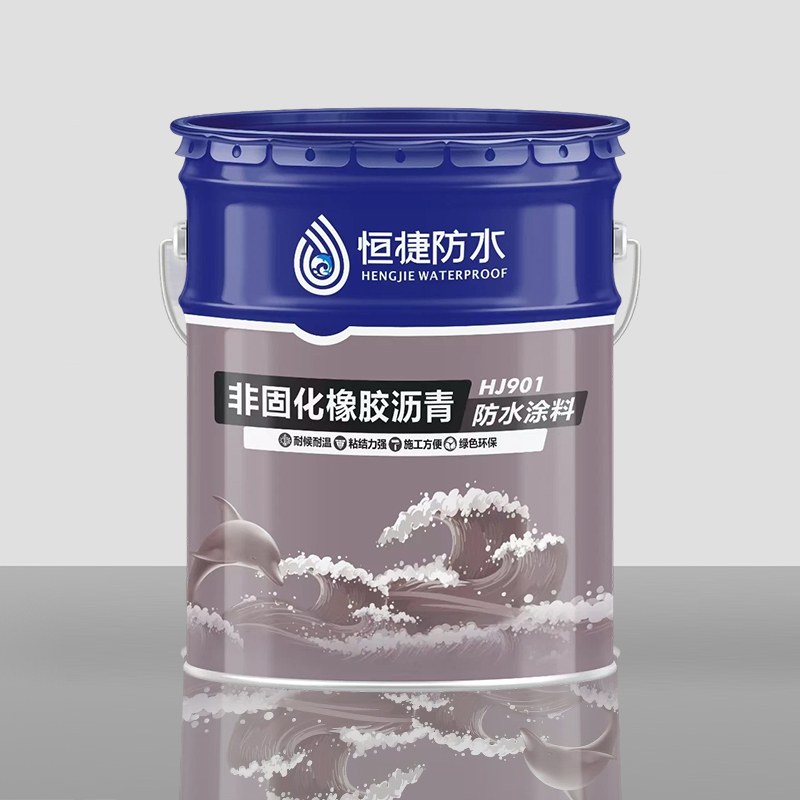
In building waterproofing projects, time is cost, and efficiency is competitiveness. Traditional waterproofing materials often rely on solvent evaporation or chemical reactions to complete the "film-forming" process, requiring waiting hours or even days before the next step can be carried out. This not only slows down the overall progress but is also susceptible to interference from environmental factors such as weather and humidity. The emergence of non-curing rubber asphalt waterproof coating completely breaks this constraint—it never pursues "drying" nor forms a rigid film layer, but rather serves its purpose in a consistently soft, viscous paste form. It is this "non-film-forming" characteristic that is the core secret to its significantly improved construction efficiency and accelerated project delivery.
The key lies in its unique physical state and construction logic. Non-curing rubber asphalt coatings are in a highly fluid, hot-melt state after heating, allowing for rapid application by scraping or spraying onto the substrate surface. Once cooled to room temperature, it does not harden and form a film like ordinary coatings, but remains a long-term non-curing, elasto-plastic paste. This means that there is almost no waiting time after construction is completed—the roll material can be laid immediately, and the subsequent protective layer can be quickly applied. It eliminates the lengthy waiting periods of "drying," "curing," and "maintenance" required by traditional materials, compressing processes that were originally scattered over several days into a single day or even on the same work surface, greatly improving the compactness and continuity of the construction rhythm.
Furthermore, this "apply-as-you-go" characteristic significantly enhances adaptability to complex working conditions. In humid, slightly seeping, or low-temperature environments, many water-based or reactive coatings struggle to form a film or experience a sharp drop in adhesion, necessitating work stoppages while waiting for conditions to improve. Non-curing coatings, with their hot-melt application method and excellent adhesion to wet substrates, can adhere firmly even on slightly damp concrete surfaces, forming a continuous sealing layer. This not only avoids downtime losses due to weather delays but also reduces the additional manpower and equipment costs required to create "ideal construction conditions."
In addition, composite construction with roll materials becomes more efficient than ever before. In traditional methods, gaps between the waterproofing membrane and the substrate can easily lead to bulging and delamination due to thermal expansion and contraction or structural deformation. Non-curing coatings, due to their non-curing nature, maintain a full adhesion to the substrate. Even if minor cracks or displacement occur in the substrate, the coating flows and fills the gap, achieving a "self-healing" seal. During application, workers simply apply the hot-melt coating evenly and then roll out the membrane. The two fuse rapidly under residual heat, requiring no additional adhesives or complex overlapping. The entire process is smooth, material-saving, and highly forgiving, significantly reducing reliance on worker skills while improving overall system reliability.
Notably, non-curing coatings are particularly efficient at handling irregularly shaped joints. In traditionally challenging waterproofing areas such as pipe roots, corners, and expansion joints, no cutting, splicing, or multiple coats are needed. Simply apply a thick layer of the paste-like coating with a scraper to create a seamless seal. This "soft yet firm" construction method not only saves on material waste but also avoids potential leaks caused by improper joint treatment, improving project quality from the source.
Ultimately, the reason why non-curing rubber asphalt waterproof coating can significantly shorten construction time and improve efficiency is not due to a simple increase in speed, but rather by overturning the traditional thinking of "film formation is necessary" and reconstructing the logical chain of waterproof construction. It replaces "waiting for hardening" with "continuous flexibility," "instant bonding" with "step-by-step waiting," and "adapting to site conditions" to eliminate "dependency on conditions." In modern construction projects that pursue both high quality and fast delivery, this solution that can accelerate progress without sacrificing reliability is becoming the preferred choice for more and more project managers. While others are still waiting for the coating to dry, your project has already quietly entered the next stage—this is the true efficiency revolution brought about by non-curing technology.
The key lies in its unique physical state and construction logic. Non-curing rubber asphalt coatings are in a highly fluid, hot-melt state after heating, allowing for rapid application by scraping or spraying onto the substrate surface. Once cooled to room temperature, it does not harden and form a film like ordinary coatings, but remains a long-term non-curing, elasto-plastic paste. This means that there is almost no waiting time after construction is completed—the roll material can be laid immediately, and the subsequent protective layer can be quickly applied. It eliminates the lengthy waiting periods of "drying," "curing," and "maintenance" required by traditional materials, compressing processes that were originally scattered over several days into a single day or even on the same work surface, greatly improving the compactness and continuity of the construction rhythm.
Furthermore, this "apply-as-you-go" characteristic significantly enhances adaptability to complex working conditions. In humid, slightly seeping, or low-temperature environments, many water-based or reactive coatings struggle to form a film or experience a sharp drop in adhesion, necessitating work stoppages while waiting for conditions to improve. Non-curing coatings, with their hot-melt application method and excellent adhesion to wet substrates, can adhere firmly even on slightly damp concrete surfaces, forming a continuous sealing layer. This not only avoids downtime losses due to weather delays but also reduces the additional manpower and equipment costs required to create "ideal construction conditions."
In addition, composite construction with roll materials becomes more efficient than ever before. In traditional methods, gaps between the waterproofing membrane and the substrate can easily lead to bulging and delamination due to thermal expansion and contraction or structural deformation. Non-curing coatings, due to their non-curing nature, maintain a full adhesion to the substrate. Even if minor cracks or displacement occur in the substrate, the coating flows and fills the gap, achieving a "self-healing" seal. During application, workers simply apply the hot-melt coating evenly and then roll out the membrane. The two fuse rapidly under residual heat, requiring no additional adhesives or complex overlapping. The entire process is smooth, material-saving, and highly forgiving, significantly reducing reliance on worker skills while improving overall system reliability.
Notably, non-curing coatings are particularly efficient at handling irregularly shaped joints. In traditionally challenging waterproofing areas such as pipe roots, corners, and expansion joints, no cutting, splicing, or multiple coats are needed. Simply apply a thick layer of the paste-like coating with a scraper to create a seamless seal. This "soft yet firm" construction method not only saves on material waste but also avoids potential leaks caused by improper joint treatment, improving project quality from the source.
Ultimately, the reason why non-curing rubber asphalt waterproof coating can significantly shorten construction time and improve efficiency is not due to a simple increase in speed, but rather by overturning the traditional thinking of "film formation is necessary" and reconstructing the logical chain of waterproof construction. It replaces "waiting for hardening" with "continuous flexibility," "instant bonding" with "step-by-step waiting," and "adapting to site conditions" to eliminate "dependency on conditions." In modern construction projects that pursue both high quality and fast delivery, this solution that can accelerate progress without sacrificing reliability is becoming the preferred choice for more and more project managers. While others are still waiting for the coating to dry, your project has already quietly entered the next stage—this is the true efficiency revolution brought about by non-curing technology.