


How to control thickness uniformity in the production of polymer self-adhesive film pre-laid waterproof membrane?
Release Time : 2026-02-02
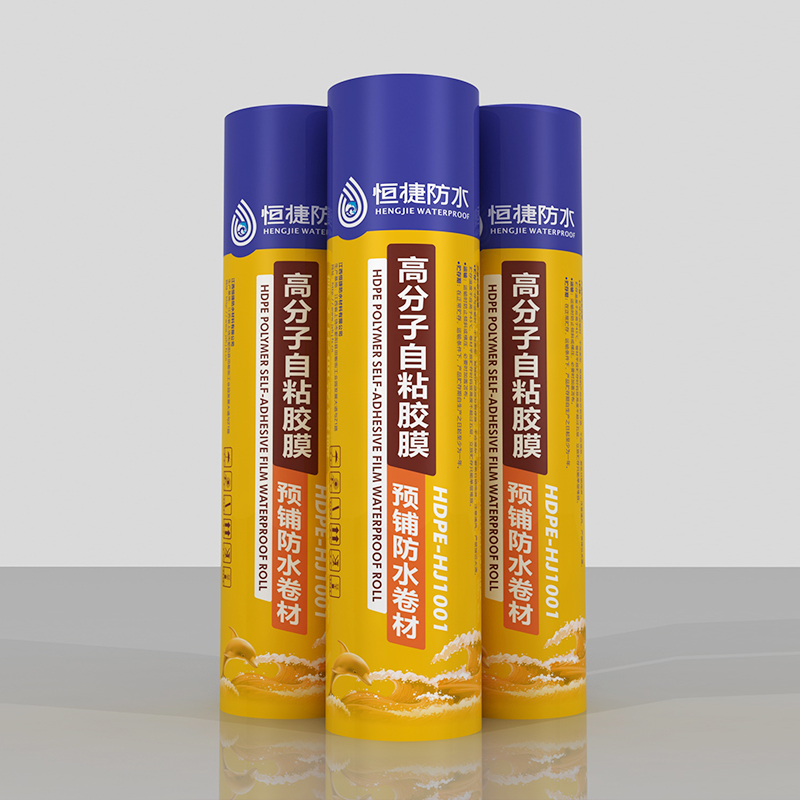
The uniformity of polymer self-adhesive pre-laid waterproof membrane thickness is a core indicator for ensuring its waterproof performance, durability, and construction reliability. Its production process requires the coordinated efforts of multiple stages, including raw material selection, extrusion process optimization, calendering equipment calibration, online monitoring technology application, environmental parameter control, finished product inspection, and equipment maintenance, forming a closed-loop control system to ensure uniform and stable membrane thickness.
The purity and properties of raw materials are fundamental to thickness uniformity. Polymer self-adhesive pre-laid waterproof membranes are typically based on materials such as high-density polyethylene (HDPE) or thermoplastic polyolefin (TPO). If impurities or uneven molecular weight distribution are present in the raw materials, differences in melt flowability will occur, leading to thickness fluctuations. Therefore, it is necessary to select suppliers with stable production capabilities and to rigorously inspect each batch of raw materials to ensure that their melt index, density, and other indicators meet process requirements.
The extrusion process is a critical step in thickness control. The temperature, pressure, and screw speed of the extruder must be precisely adjusted according to the characteristics of the raw materials. Excessive temperature can lead to material degradation, reduced melt viscosity, and localized thinning of the film; excessively low temperature may cause extrusion difficulties, resulting in a rough film surface and uneven thickness. Screw speed directly affects the residence time of the melt within the extruder; excessive speed can lead to insufficient plasticization, while excessively slow speed may cause melt degradation. Therefore, optimal process parameters must be determined through repeated experiments and monitored in real-time during production to ensure stable extrusion.
The precision of the calendering equipment directly affects the uniformity of film thickness. The gap adjustment of the calender rollers must be accurate to the micrometer level, and the pressure at both ends of the rollers must be consistent to avoid thickness deviations between the film edges and the center. Uneven wear or the presence of deposits on the roller surface can cause periodic thickness fluctuations on the film surface. Therefore, the rollers must be regularly ground and polished, and the roller gap must be calibrated using laser inspection equipment to ensure it meets production requirements. Furthermore, the production line speed must be matched with the calendering speed; sudden speed changes can cause excessive stretching or compression of the film, resulting in localized thinning.
Online detection technology is an important means of achieving real-time thickness control. Continuous monitoring of membrane thickness using laser thickness gauges, ultrasonic thickness gauges, and other equipment allows for data feedback to the control system. When the thickness deviates from the set value, the system automatically adjusts parameters such as the extruder screw speed and calender roller clearance to ensure thickness uniformity. Simultaneously, multiple detection points need to be set up on the production line, covering the entire width of the membrane material, to prevent thickness deviations caused by edge effects.
Environmental parameters have a significant impact on thickness uniformity. The temperature, humidity, and cleanliness of the production workshop must be strictly controlled. High humidity can cause raw materials to become damp, affecting melt flow; dust and other impurities may adhere to the membrane surface, causing thickness defects. Therefore, temperature and humidity control equipment and air purification systems are necessary to maintain a stable production environment. Furthermore, the membrane cooling process must be uniform to avoid uneven shrinkage due to differences in cooling rates, which would affect the thickness.
Finished product inspection is the last line of defense for thickness control. Comprehensive performance tests must be performed on the produced membrane material, including indicators such as thickness uniformity, tensile strength, and tear strength. Thickness testing requires the use of a high-precision thickness gauge. Measurements are taken at randomly selected points on the membrane material, and the average value is calculated and compared with the design value to ensure compliance with standards. For membrane materials exceeding thickness limits, the production process must be traced back promptly, process parameters adjusted, or equipment components replaced to prevent substandard products from entering the market.
Equipment maintenance and upkeep are crucial for long-term thickness uniformity. Key equipment such as extruders and calenders require regular inspection, checking the wear of components like screws and rollers, and promptly replacing aged or damaged parts. Simultaneously, equipment maintenance records must be established, documenting the time, content, and replaced components of each maintenance visit, providing a reference for subsequent production. Continuous optimization of production processes and equipment management can significantly improve the thickness uniformity of polymer self-adhesive film pre-laid waterproof membranes, laying the foundation for their reliable performance in engineering applications.