


How does a self-adhesive polymer modified bitumen waterproof membrane achieve reliable sealing without open flame?
Release Time : 2026-01-27
In modern construction engineering, the safety, environmental friendliness, and long-term reliability of waterproofing materials are increasingly important. Especially in enclosed or flammable environments such as underground spaces, subway tunnels, and pools, open flame operations are strictly prohibited, and traditional hot-melt membranes face application bottlenecks. The self-adhesive polymer modified bitumen waterproof membrane, with its "cold construction" characteristic—requiring no open flame or additional adhesives—not only meets safety and environmental requirements but also achieves strong adhesion to the substrate and long-lasting joint sealing through innovative materials science and structural design, becoming an ideal solution for challenging waterproofing projects.
1. Cold Construction: A Revolutionary Breakthrough in Safety and Environmental Protection
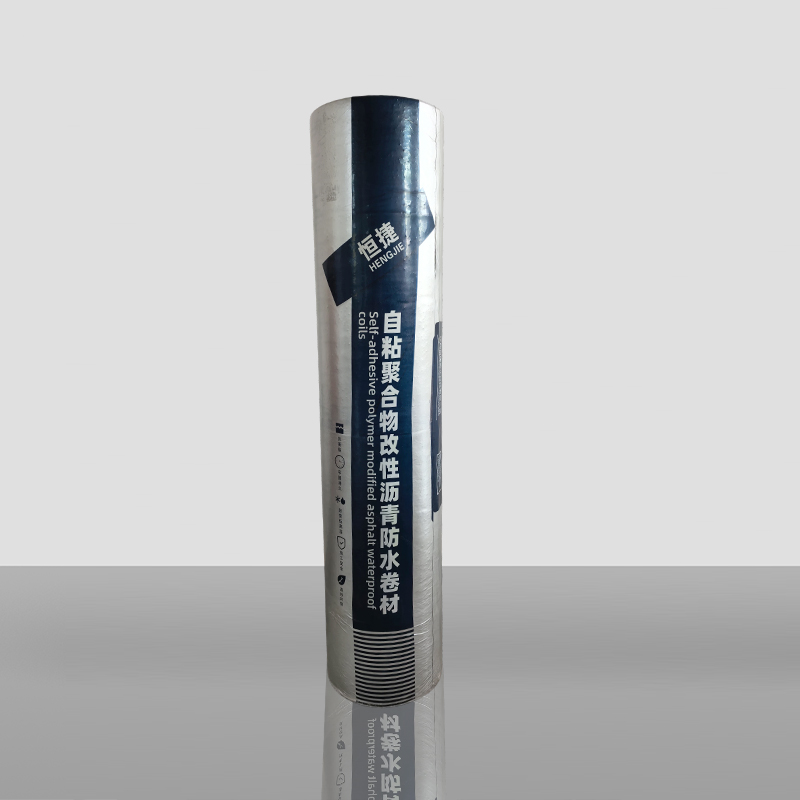
The core advantage of the self-adhesive polymer modified bitumen waterproof membrane lies in its self-adhesiveness. The membrane surface is covered with a specially formulated pressure-sensitive self-adhesive bitumen adhesive layer, which possesses excellent bonding activity even at room temperature. During construction, simply remove the release liner and lay the membrane directly onto the cleaned substrate. Rolling is then sufficient to achieve a tight bond with concrete, mortar, and other substrates. The entire process is flameless, solvent-free, and produces no harmful gases, completely eliminating fire hazards and air pollution. It is particularly suitable for fire-prohibited areas such as gas stations, underground parking garages, and subway stations, and significantly improves the working environment for workers, meeting green building and occupational health standards.
2. Fully Self-Adhesive Structure: A Qualitative Leap from Spot Bonding to Full Adhesion
Traditional waterproof membranes often use spot bonding or loose laying, which can easily lead to blistering and water seepage due to substrate deformation. Self-adhesive membranes, through their full-width self-adhesive design, ensure 100% contact and bonding between the membrane and the substrate, forming a "skin-like" waterproof layer. This full-adhesion structure effectively inhibits lateral migration of moisture beneath the membrane. Even if there is localized damage, the leakage area is strictly limited, facilitating precise repairs. More importantly, its seams utilize an overlapping self-adhesive process—after the upper and lower layers of membrane overlap, they fuse together using their own adhesive layers, achieving a bonding strength that reaches or even exceeds the strength of the membrane itself. This ensures the seam's lifespan is synchronized with the overall system, truly achieving a "seamless" connection.
3. Composite Reinforced Base: Dual Guarantee of Puncture Resistance and Durability
This waterproof membrane uses high-strength polyester fiber felt as its base, giving the material excellent tensile strength and elongation. Polyester fibers not only enhance puncture resistance, effectively resisting construction damage from rebar ends, gravel, etc., but also possess excellent fatigue resistance, capable of withstanding long-term minor deformations of the substrate caused by temperature changes, settlement, or vibration without cracking. Even in cold winter environments, the base and modified asphalt work synergistically to maintain flexibility and prevent brittle fracture.
4. Polymer-Modified Asphalt: The Source of Low-Temperature Toughness and Self-Healing Function
Ordinary asphalt easily hardens and cracks at low temperatures. However, the asphalt in self-adhesive films is modified with polymers such as SBS or SBR, significantly improving its low-temperature flexibility. It remains flexible and bendable in environments ranging from -20°C to -30°C. Simultaneously, the modified asphalt adhesive layer possesses a unique "self-healing" ability—when encountering minor punctures or cracks, the adhesive slowly flows under pressure and temperature, resealing the damaged area and restoring waterproof integrity. This characteristic is particularly important for underground engineering, tunnels, and other hard-to-maintain areas.
5. Wide Applicability: Reliable Protection from Rooftops to Deep Underground
Thanks to the above properties, this material is widely used in non-exposed roofs, basement floors and sidewalls, open-cut subway stations, tunnel linings, reservoirs, drainage ditches, and other applications. In cold regions, its low-temperature flexibility ensures no cracking during winter construction; on damp substrates, some products can also be "wet-laid" through special formulations, further expanding the application window.
Self-adhesive polymer modified bitumen waterproof membranes, known for their "cold application," deliver unparalleled reliability. They replace open-flame baking with the material's own intelligent bonding, combat substrate deformation with full-width adhesion, and overcome temperature limits through polymer modification. Finding a perfect balance between safety, environmental protection, and performance, they not only address the urgent needs of fire-prohibited projects but also represent the evolution of waterproofing technology towards green and intelligent solutions. In the future, with optimized formulas and standardized construction processes, these "silent yet powerful" waterproofing systems will undoubtedly silently safeguard the long-term health of buildings in more critical infrastructure projects.
1. Cold Construction: A Revolutionary Breakthrough in Safety and Environmental Protection
The core advantage of the self-adhesive polymer modified bitumen waterproof membrane lies in its self-adhesiveness. The membrane surface is covered with a specially formulated pressure-sensitive self-adhesive bitumen adhesive layer, which possesses excellent bonding activity even at room temperature. During construction, simply remove the release liner and lay the membrane directly onto the cleaned substrate. Rolling is then sufficient to achieve a tight bond with concrete, mortar, and other substrates. The entire process is flameless, solvent-free, and produces no harmful gases, completely eliminating fire hazards and air pollution. It is particularly suitable for fire-prohibited areas such as gas stations, underground parking garages, and subway stations, and significantly improves the working environment for workers, meeting green building and occupational health standards.
2. Fully Self-Adhesive Structure: A Qualitative Leap from Spot Bonding to Full Adhesion
Traditional waterproof membranes often use spot bonding or loose laying, which can easily lead to blistering and water seepage due to substrate deformation. Self-adhesive membranes, through their full-width self-adhesive design, ensure 100% contact and bonding between the membrane and the substrate, forming a "skin-like" waterproof layer. This full-adhesion structure effectively inhibits lateral migration of moisture beneath the membrane. Even if there is localized damage, the leakage area is strictly limited, facilitating precise repairs. More importantly, its seams utilize an overlapping self-adhesive process—after the upper and lower layers of membrane overlap, they fuse together using their own adhesive layers, achieving a bonding strength that reaches or even exceeds the strength of the membrane itself. This ensures the seam's lifespan is synchronized with the overall system, truly achieving a "seamless" connection.
3. Composite Reinforced Base: Dual Guarantee of Puncture Resistance and Durability
This waterproof membrane uses high-strength polyester fiber felt as its base, giving the material excellent tensile strength and elongation. Polyester fibers not only enhance puncture resistance, effectively resisting construction damage from rebar ends, gravel, etc., but also possess excellent fatigue resistance, capable of withstanding long-term minor deformations of the substrate caused by temperature changes, settlement, or vibration without cracking. Even in cold winter environments, the base and modified asphalt work synergistically to maintain flexibility and prevent brittle fracture.
4. Polymer-Modified Asphalt: The Source of Low-Temperature Toughness and Self-Healing Function
Ordinary asphalt easily hardens and cracks at low temperatures. However, the asphalt in self-adhesive films is modified with polymers such as SBS or SBR, significantly improving its low-temperature flexibility. It remains flexible and bendable in environments ranging from -20°C to -30°C. Simultaneously, the modified asphalt adhesive layer possesses a unique "self-healing" ability—when encountering minor punctures or cracks, the adhesive slowly flows under pressure and temperature, resealing the damaged area and restoring waterproof integrity. This characteristic is particularly important for underground engineering, tunnels, and other hard-to-maintain areas.
5. Wide Applicability: Reliable Protection from Rooftops to Deep Underground
Thanks to the above properties, this material is widely used in non-exposed roofs, basement floors and sidewalls, open-cut subway stations, tunnel linings, reservoirs, drainage ditches, and other applications. In cold regions, its low-temperature flexibility ensures no cracking during winter construction; on damp substrates, some products can also be "wet-laid" through special formulations, further expanding the application window.
Self-adhesive polymer modified bitumen waterproof membranes, known for their "cold application," deliver unparalleled reliability. They replace open-flame baking with the material's own intelligent bonding, combat substrate deformation with full-width adhesion, and overcome temperature limits through polymer modification. Finding a perfect balance between safety, environmental protection, and performance, they not only address the urgent needs of fire-prohibited projects but also represent the evolution of waterproofing technology towards green and intelligent solutions. In the future, with optimized formulas and standardized construction processes, these "silent yet powerful" waterproofing systems will undoubtedly silently safeguard the long-term health of buildings in more critical infrastructure projects.